
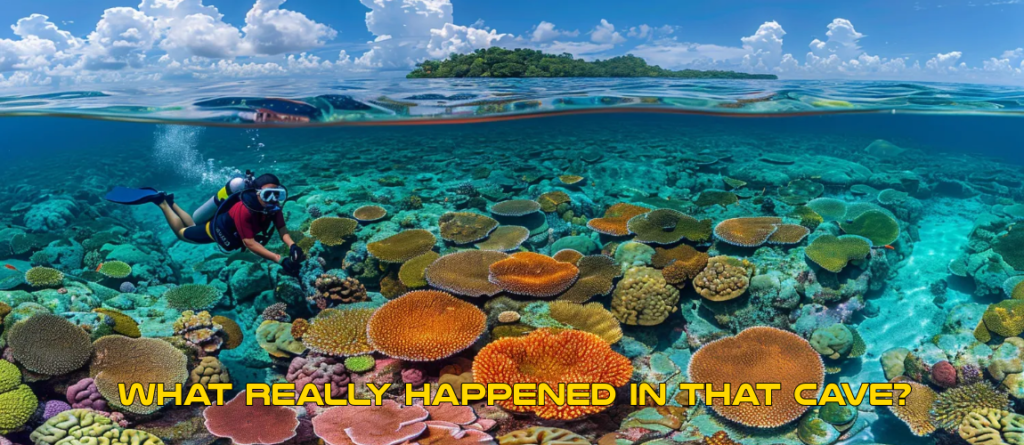
The Devana Kandu Tragedy: What really happened?
An independent analysis of the deaths of five Italian researchers in the Maldives, May 2026
Jack & Seth
This article is based on publicly available sources including reporting by Maldives Independent, DIVE Magazine, Divernet, ScubaBoard, SBS News, The Human Diver, and various Italian and international outlets. All conclusions are the author’s own inference from those sources and should be treated as analysis rather than established fact. The criminal investigations in both Rome and the Maldives are ongoing.
Because of the highly technical data some of this article has been based on AI research and alternative search-engine results.
On 14 May 2026, a group of Italian research divers entered an underwater cave system called Devana Kandu — also known as Dhekunu Kandu or Thinwana Kandu — near Alimathaa Island in the Vaavu Atoll of the Maldives. None of them came back out. The group consisted of a highly experienced and accomplished leader, a trusted local guide and three additional scientists who had been conducting research in the local waters.
A sixth diver, a young woman whose identity has not been officially disclosed, declined to join them, choosing at the last moment not to participate. A Maldivian military diver, Sergeant-Major Mohamed Mahudhee, subsequently died attempting a recovery operation, bringing the total death-toll to six.
The official narrative that emerged in the immediate aftermath was simple and, on its face, damning: a group of Italian operatives, functioning beyond their permits and without the appropriate cave-diving certifications and equipment, blundered into a dangerous environment at extreme depth and paid for it with their lives. It seemed they were reckless, unprepared and that this was an unfortunate and preventable tragedy.
But is that narrative wrong — perhaps not in expressing the literal facts, but in the entire scope of its framing? The difference between those two things matters enormously, both for the memory of the people who died and for understanding what they were actually trying to do when this tragedy occurred.
What follows is a trail of logical connections, built from publicly available sources, of who these five people were, what connected them, what they were looking for, and why the stakes of that search may have been far higher — and far more threatening to powerful interests — than any official investigation is likely to conclude publicly.
A significant caveat must be stated clearly at the outset. Much of what follows is reasoned inference built on incomplete and often contradictory public information. The official investigations — one in Rome, one in the Maldives — are officially ongoing at the time of writing. The GoPro cameras recovered from the cave by the Finnish recovery team have been handed to investigators and their contents have not been publicly disclosed. Physical evidence is extremely limited. Although the bodies were successfully recovered, there was significant decomposition that has made autopsy and analysis more difficult and less revealing that we would hope.
But it not the purpose of this article to answer all the unanswerable questions, its intention is to pose reasonable questions that might help to move us closer to the truth.
Part One: The Divers
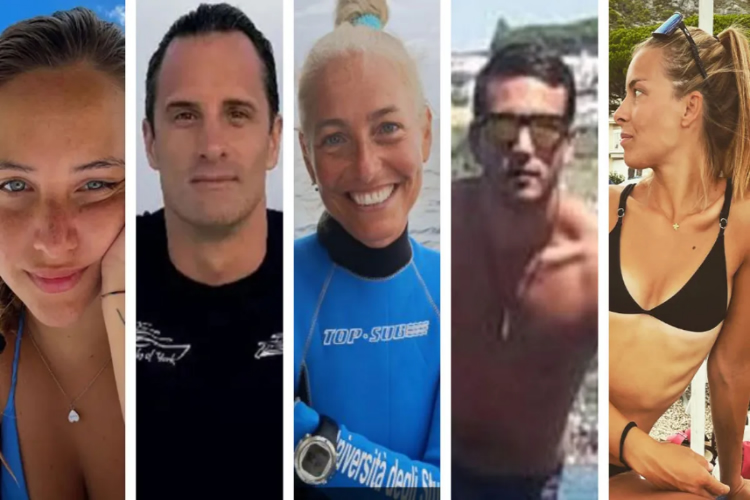
Monica Montefalcone, 51 — The Architect
Monica Montefalcone was an Associate Professor of Ecology at the University of Genoa’s Department of Earth, Environment and Life Sciences — known as DiSTAV. She had authored over 130 peer-reviewed scientific publications and was regarded internationally as one of Italy’s foremost authorities on Mediterranean Posidonia seagrass ecosystems and tropical coral reef monitoring.
From 2013, she served as scientific coordinator of annual research expeditions to the Maldives, conducted under an institutional collaboration between DiSTAV, the Italian tour operator Albatros Top Boat, and Save the Beach Maldives. She had been diving in the Maldives for over a decade — more than any other Italian researcher — and she knew its reefs with a depth of familiarity that very few outsiders could match.
Her most recently published work, completed in the months before her death, assessed the ecological impact of temperature changes that had triggered the 2023–2024 global coral bleaching event — the worst on record — across eighteen reefs in the central and southern Maldivian atolls. In the central atolls she documented, live hard coral cover had dropped by more than 40% on average, with the highest single-site mortality of 57% occurring on a lagoon reef in Ari Atoll.
She was on the 2026 Maldives expedition under an official university research permit, issued in February 2026, authorising dives to 50 metres for soft coral monitoring, with the Duke of York liveaboard designated as the operational vessel.
Before her academic career, Monica Montefalcone had worked as a pharmaceutical sales representative — an “informatore scientifico del farmaco” — in Milan, where she met her husband Carlo Sommacal in 2000. She left the pharmaceutical industry to pursue marine biology, eventually completing a doctorate and building a substantial academic career. She was 51 at the time of her death.
Her husband Carlo described her as one of the best divers in the world, with approximately 5,000 logged dives. He stated that she had survived the 2004 Indian Ocean tsunami while diving off Kenya. He was, and remains, adamant that she did not make a mistake and that something unexpected must have happened down there.
Muriel Oddenino — The Research Fellow
Muriel Oddenino was a research fellow at the University of Genoa, working within Montefalcone’s research team. She held a university permit for the 2026 Maldives expedition, placing her officially within the sanctioned scientific mission alongside Montefalcone.
Her father, Andrea Oddenino, is a longtime general practitioner in the town of Poirino in Turin province — a small Piedmontese community where he had practised for decades and knew his patients intimately.
The specific focus of Muriel’s research at the time of her death has not been fully disclosed in publicly available sources. She was early in her career, working under Montefalcone’s institutional umbrella. Her former diving instructor, Riccardo Gambacorta, publicly stated after her death that he did not believe the group died from oxygen intoxication, adding: “My personal opinion is that an unexpected incident may have occurred underwater. They essentially did not anticipate a certain situation.”
Federico Gualtieri, 31 — The Taxonomist
Federico Gualtieri had recently graduated with the highest honours in Marine Biology and Ecology from the University of Genoa, with a master’s thesis specifically focused on the diversity and ecology of Corallimorpharia and Zoantharia in the central Maldivian atolls — precisely the reef organisms found in the cave system where he died.
He had just won a highly selective competitive position as a researcher at the Okinawa Institute of Science and Technology Graduate University (OIST) in Japan. His appointment was recent — confirmed in the months before his death — and represented the next phase of research he had been building toward throughout his academic career.
Federico Gualtieri was not on the official University of Genoa scientific permit for the expedition — a fact the university has emphasised in its public statements while simultaneously acknowledging that his thesis was conducted under Montefalcone’s supervision and that both had been diving at Alimathaa in the days preceding the accident as part of official research activities. This contradiction in the university’s position has not been publicly resolved.
His father, Luca Gualtieri, is a retired pharmaceutical sales representative. The Federation of Italian Pharmaceutical Sales Representatives’ Associations issued a formal condolence statement specifically noting that both Carlo Sommacal and Luca Gualtieri were retired colleagues from that profession who had lost children in the accident.
Federico Gualtieri was 31 when the tragedy occurred.
Giorgia Sommacal, 23 — The Application Mechanism
Giorgia Sommacal was Monica Montefalcone’s daughter, a biomedical engineering student at the University of Genoa. She and her mother had logged approximately 500 dives together. She was not on the university’s official research permit for the expedition.
Her thesis research, supervised by researcher Martina Brofiga and coordinated by Professor Paolo Massobrio, was conducted in vitro using neurons — nerve cells. She was developing a protocol to record the electrophysiological activity of neurons: the measurement of their electrical behaviour under controlled laboratory conditions. Her research motivation, according to her father Carlo, was rooted in watching her grandfather’s gradual deterioration from Alzheimer’s disease.
She had completed her thesis and was ready to graduate at the time of her death. Her classmates and research supervisors subsequently petitioned the University of Genoa to award her a posthumous degree.
Giorgia Sommacal was only 23 at the time of her death.
Gianluca Benedetti — The Operational Layer
Gianluca Benedetti was a diving instructor and the operations manager of the Duke of York liveaboard vessel. He had lived in the Maldives for seven years, giving him a deep familiarity with local dive sites, conditions, and the informal norms that governed how the Maldives’ nominal diving regulations were applied in practice.
He was not on the official research permit.
His body was recovered on the day of the accident, found near the cave mouth with a depleted air cylinder — suggesting he either attempted to exit first or was positioned differently within the cave when the fateful event finally struck.
His precise role in the planning and execution of the cave dive has not been publicly established. As operations manager of the boat, his knowledge of and cooperation with the dive would have been logistically essential. Monica’s husband later described him as highly competent and a man who took all necessary precautions.
Part Two: The Bigger Picture
Carlo Sommacal — The Strategist
Carlo Sommacal, Monica’s husband and Giorgia’s father, was not present on the expedition. He became one of the most publicly visible voices in its aftermath, and his behaviour in that role warrants careful evaluation.
He and Monica met in 2000 when a mutual colleague — a regional area manager who was a friend of Carlo’s brother — introduced them while both were working as pharmaceutical sales representatives in Milan. Monica subsequently left that industry for marine biology, about a year and a half after they married. Carlo continued in pharmaceutical sales until his retirement approximately 18 months before the accident — a retirement prompted by his need to care for his brother, who was diagnosed with pancreatic cancer, a disease that killed him rapidly.
Carlo’s post-retirement public activity, documented on LinkedIn, focuses specifically and consistently on the intersection of pharmaceutical access and global health equity. His posts engage directly with two specific developments: the addition of GLP-1 agonists — the class of drugs that includes Ozempic and Wegovy — to the WHO Essential Medicines List, and the contentious addition of pembrolizumab (Keytruda, manufactured by Merck) to the same list. His framing is consistently oriented around access for developing nations, reduction of healthcare inequalities, and the sustainability of generic drug production.
Keytuda is one of the most successful contributors in a battle against cancer and currently demands an exceptionally high price, a price that makes it completely beyond the reach of the people living in developing nations.
These are not the casual posts of a retiree following industry news. They reflect detailed knowledge of the WHO Essential Medicines List mechanism — specifically, that inclusion on that list creates international legal and political pressure on manufacturers to allow generic production and reduce pricing globally. Pembrolizumab generated approximately $31.7 billion in global sales in 2025 alone, making it the world’s best-selling prescription drug. Its patent protections will begin expiring around 2028 and they are currently spending billions in research for new products to fill the gap once it does. Merck has resisted its inclusion on the WHO Essential Medicines List strenuously and expensively.
Carlo Sommacal’s LinkedIn presence places him in direct, knowledgeable opposition to that resistance.
In media interviews following his wife’s and daughter’s deaths, Carlo was notably composed — not the broken, disoriented grief of sudden loss, but the controlled, precise anger of a man who believed something specific had happened and had the intention of pursuing it. He challenged specific factual claims in the media with precision. He stated his wife would never have put her daughter or colleagues at risk. He described her as always conscientious and never reckless. He said he did not believe the mainstream narrative and that he suspected something had happened down there that the official account did not explain.
He did not elaborate. He remains, as far as publicly available sources show, a motivated observer of the investigation who seems content to say as little as necessary.
Part Three: Connections and Motivations
The five people who entered that cave were not a random group of researchers drawn together by institutional proximity. They were a carefully connected team, each positioned at a specific point in what appears, in retrospect, to be a deliberate and sophisticated organisation.
The social substrate connecting them is the Italian pharmaceutical industry of the late 1990s and early 2000s. Monica Montefalcone started exactly there and left to begin a new career. Carlo Sommacal spent his entire career in the same industry. Luca Gualtieri — Federico’s father — also worked in the same industry throughout his entire working life. Andrea Oddenino — Muriel’s father — was a GP whose professional life was spent in close relationship with pharmaceutical representatives of exactly that era and that region. These families knew each other through overlapping professional networks spanning decades and the fact they were socially connected is not in dispute.
From that shared association, each member of the group had developed a specific, personally driven motivation that pointed consistently toward the same destination: the intersection of marine biology and pharmaceutical application. It seems, however, that their interests were specifically oriented toward making discoveries available to the public rather than to commercial interests.
Monica left the pharmaceutical industry in the search for her true vocation. The transition, by her husband’s account, was one of love for marine biology rather than philosophical rejection of commercial medicine — but the direction was away from profit and toward science for its own sake. It appears to have happened around the time she began her family, a time when many parents begin to seriously evaluate their lives.
Carlo watched the pharmaceutical industry fail his brother, then turned his industry knowledge into a campaign to force the world’s most profitable drug company to price its cancer treatments within reach of the people who needed them most.
Giorgia, their daughter was motivated differently. She watched Alzheimer’s disease take her grandfather and chose to build the neurological measurement tools that would be needed to test potential treatments on neurons in vitro.
Federico built his entire academic career around the specific organisms in the specific location where the group died, then secured a position at an institution whose published policy explicitly prohibits conducting research for the commercial benefit of any company and mandates public dissemination of all findings. To be clear, he had a history of excellence behind him and had his choice of assignments. But instead of remaining in Italy, where the law had recently changed to remove private ownership of research, he sought out a post in Japan, in one of the few places where the law take the very opposite view.
Muriel Oddenino, whose specific research focus has not been fully established publicly, came from a family embedded in the same provincial medical ecosystem that produced the others.
These are not coincidences of background. They are the constituent parts of a coherent project — one that none of them needed to articulate explicitly to each other, because their shared history and shared values made the direction obvious.
Part Four: What Was in That Cave?
To understand what this group was doing in Devana Kandu, it is necessary to understand both what the cave environment contains and why a deep, sealed cave system in the Maldives in the aftermath of the worst coral bleaching event in recorded history would represent something of extraordinary scientific — and potentially pharmaceutical — significance.
The Coral Bleaching Context
The 2023–2024 global mass bleaching event was the fourth in recorded history and by far the most severe. Coral bleaching occurs when seawater temperature rises sufficiently — even 1–2 degrees Celsius above the normal seasonal maximum, sustained over several weeks — to cause corals to expel the symbiotic algae (zooxanthellae) that provide them with up to 90% of their energy. Without those algae, corals turn white and begin to starve. If temperatures normalise quickly, recovery is possible. If they do not, the coral dies.
In the central Maldivian atolls, Montefalcone’s own published data showed live hard coral cover had fallen by more than 40% on average. Across the Maldives, the shallow and mid-depth reef ecosystems that are accessible to standard recreational diving had been catastrophically altered.
A deep cave system at 55–70 metres, protected from direct sunlight, buffered against surface temperature fluctuations by depth and geology, and structurally isolated from the thermal anomaly that caused mass surface mortality, represents precisely the environment where coral and coral-associated organisms might have survived intact while the surrounding reef was devastated.
For a researcher documenting what survived the worst bleaching event in history, and why, such a cave is not an interesting aside, it is potentially the most important site available.
The Organisms — Why They Matter Far Beyond Ecology.
Federico Gualtieri’s master’s thesis was on Corallimorpharia and Zoantharia — two orders of soft-bodied cnidarians closely related to anemones. They are not the hard corals most people picture when thinking about coral reefs. They are softer, more variable organisms that thrive in low-light, deep-reef, and cave environments precisely where hard corals cannot. They are also among the most pharmacologically significant marine organisms known to science.
Within the Zoantharia order, specifically within the genus “Palythoa”, organisms produce one of the most potent natural toxins ever identified: palytoxin.
Palytoxin works by binding to the sodium-potassium ATPase pump — the Na⁺/K⁺-ATPase — a protein embedded in virtually every cell membrane in the body. This pump is fundamental to cellular function: it maintains the electrochemical gradients that allow nerves to fire, muscles to contract, and cells to regulate their internal chemistry. Palytoxin transforms this pump into an open, unregulated ion channel, causing catastrophic disruption of cellular ion balance, triggering calcium cascades, and ultimately causing cell death.
At first glance, a compound that so effectively kills cells appears to be a weapon, not a medicine. But the pharmaceutical relevance of palytoxin runs in two distinct directions, each of which connects directly to the research interests of specific members of this group.
The Cancer Connection.
Palytoxin and its analogues demonstrate extraordinary cytotoxic effects on cancer cells at picomolar concentrations — meaning that incredibly small amounts are sufficient to kill malignant cells, amounts measured in trillionths of a gram per litre. The mechanism — disruption of Na⁺/K⁺-ATPase leading to uncontrolled calcium influx and cell death — operates on cancer cells with particular effectiveness because rapidly dividing cells are especially vulnerable to ion transport disruption. Bacteria associated with *Palythoa variabilis* have been found to produce piericidin A1, a compound with demonstrated inhibition of metastatic prostate cancer cell growth. The field of marine natural products research has been investigating palytoxin analogues as potential anticancer scaffolds for decades, with the core challenge being the selective delivery of cytotoxic effects to tumour cells rather than healthy ones.
The Alzheimer’s Connection.
While the blistering obvious benefits that this research might offer in the field of cancer, it might be tempting to disregard the idea that it could offer significant gains in other, unrelated fields. But this is where the convergence with Giorgia Sommacal’s research becomes specific and striking.
Published research in the “Proceedings of the National Academy of Sciences” has established that the primary molecular mechanism by which amyloid beta oligomers — the protein aggregates central to Alzheimer’s disease pathology — kill neurons involves direct action on the neuron-specific Na⁺/K⁺-ATPase alpha-3 subunit. The amyloid oligomers bind to this pump, impair its function, trigger calcium channel activation, cause mitochondrial calcium dysfunction, and initiate the neurodegeneration that characterises Alzheimer’s disease.
The Na⁺/K⁺-ATPase pump is therefore both the target of Alzheimer’s pathology and the target of palytoxin. A compound that modulates this pump — whether by inhibiting, activating, or otherwise altering its function in controlled ways — is directly relevant to Alzheimer’s research. Multiple research groups have identified the Na⁺/K⁺-ATPase as a potentially critical neuroprotective target, meaning that controlling this pump’s function could slow or prevent the neurodegeneration of Alzheimer’s disease.
Giorgia Sommacal was developing a protocol to record the electrophysiological activity of neurons in vitro. Electrophysiological recording is the precise experimental tool needed to detect and measure changes in neuronal function caused by compounds acting on ion channels and pumps. It is the measurement apparatus that must exist before you can test whether a marine-derived compound — one acting on the same molecular pump that Alzheimer’s pathology attacks — has any effect on living neurons.
She was not doing abstract neuroscience. She was building the instrument needed to read the data that the cave samples might eventually generate.
The Cave as a Scientific Control.
There is a further dimension to the scientific value of the cave that goes beyond the organisms themselves. In environmental research, a control sample must come from a population that has experienced the same conditions as the study population except for the specific variable being measured.
If Montefalcone’s expedition had already collected samples from the devastated outer reefs during the same trip — documenting what the bleaching had done to soft coral communities across the atoll system — then samples from a deep cave population that experienced none of that thermal stress would constitute a near-perfect natural control. Same species, same atoll, same water chemistry baseline — but completely isolated from the bleaching event. Without that control, outer reef data shows what the reef looks like after bleaching. With it, it shows what bleaching specifically did, relative to an undisturbed baseline, in a way that separates bleaching impact from every other variable.
This means the cave samples were not just scientifically interesting in themselves. They were potentially the piece that made the entire dataset from the trip publishable to the highest scientific standard. Without the cave data, the expedition produced documentation of damage. With it, it produced evidence that could withstand peer review and anchor further research.
The Time Sensitivity.
The value of that control sample was not permanent. Reefs recover — slowly, partially, imperfectly — but the post-bleaching contrast between the devastated outer reef and an undisturbed deep cave population narrows with time. The specific dataset that would have been most valuable in May 2026 would be measurably less valuable in May 2027 and considerably less so in 2028.
There was a second and arguably more significant time constraint. Federico Gualtieri had just secured his position at OIST, A prominent university in Okinawa, Japan and his appointment was imminent. Once he began formal research there, any findings from that expedition could feed into the OIST institutional framework. And OIST’s own published policies change what happens to those findings fundamentally.
In other words, once he officially began at his post in OIST, every element of his findings would, by design and with the full weight of the law, be entirely public and therefore secure from the possible predations of those looking to profit from them.
Part Five: The Okinawa Framework — Why It Matters.
The Okinawa Institute of Science and Technology Graduate University is not a typical research institution. It was established by the Japanese government as a deliberately international, interdisciplinary research university with a specific mandate: to produce world-class science in the public interest, free from the commercial pressures that increasingly constrain conventional university research.
OIST’s own published institutional policy states, explicitly: “Secret research that precludes the disclosure of research results is not permitted. Research at the University may not be conducted for the economic benefit of any particular company or other commercial entity. The research conducted at the University must be intended for public dissemination.”
This is not idle posturing. It is a constitutional prohibition on the most common mechanism by which valuable research discoveries are captured by commercial interests: the confidential licensing agreement, the undisclosed corporate partnership, the quietly buried finding that threatens an existing product.
Japan’s broader national research policy reinforces this institutional framework. From January 2025 — the same month the Maldives expedition was being planned — researchers in Japan receiving government funding were legally required to make their papers freely available on institutional repositories. Japan’s 2023 innovation strategy explicitly mandated an environment in which researchers can freely and widely publish and share their research outputs.
The contrast with Italy’s parallel legislative development could not be more pointed. In August 2023, Italy revised Article 65 of its Intellectual Property Code, reversing the long-standing “professor’s privilege” under which Italian researchers had personally owned the intellectual property arising from their work. Under the new law, the University of Genoa owns the IP arising from Monica Montefalcone’s employment. The researcher no longer controls the decision about whether and how to publish or commercialise findings. The institution does.
Under the pre-2023 Italian framework, Montefalcone could have published her findings openly at will. Under the post-2023 framework, she could not do so unilaterally. The university — and through it, potentially its funders and commercial partners — would have had a legal seat at that table.
Federico Gualtieri’s imminent move to OIST solved this problem.
Research conducted under the OIST institutional framework, by a researcher with formal OIST affiliation, would fall under OIST’s mandatory public dissemination policy and Japan’s national open access mandate. Once published through that framework, the findings would be in the public domain in a form that made commercial suppression legally and practically impossible. The standard pharmaceutical industry playbook for managing threatening discoveries — acquire the research, acquire the researcher, bury the finding in a licensing agreement — cannot be applied to research that an institution is constitutionally prohibited from keeping secret and legally required to publish openly.
The window was narrow. Federico had won the position but had not yet taken it up. The Maldives expedition was scheduled. The cave was there. The samples were one dive away.
Part Six: The Stakes — Merck, the WHO, and the Value of What They Were Chasing.
To understand why any of this matters beyond the tragedy itself, it is necessary to confront the financial reality of the pharmaceutical landscape into which this group’s potential discovery would have entered.
Pembrolizumab — The World’s Most Valuable Drug
Pembrolizumab, sold under the brand name Keytruda by Merck, is a monoclonal antibody that works as a checkpoint inhibitor in cancer immunotherapy. It functions by blocking the PD-1 receptor on immune cells, preventing cancer cells from disguising themselves as normal tissue and allowing the immune system to attack them. Approved initially for melanoma in 2014, it has since been licensed for an extraordinary range of cancers — lung, bladder, stomach, liver, head and neck, cervical, colorectal, and others.
Keytruda generated approximately $31.7 billion in global sales in 2025. It is not merely the world’s best-selling cancer drug. It is the world’s best-selling prescription drug of any kind.
Merck’s patent protection on pembrolizumab begins expiring around 2028 — representing the largest single patent cliff in pharmaceutical history. The company has been spending tens of billions on acquisitions and pipeline development to identify what comes next. A novel compound that kills cancer cells through a completely different mechanism — not PD-1 checkpoint inhibition but direct Na⁺/K⁺-ATPase disruption, potentially derived from deep-reef marine organisms — would not merely compete with Keytruda. It would represent an entirely new treatment modality, potentially combinable with immunotherapy, operating through a pathway that current cancer drugs do not touch.
Carlo Sommacal, in his post-retirement advocacy work, has been specifically and publicly campaigning for pembrolizumab’s inclusion on the WHO Essential Medicines List — a direct challenge to Merck’s pricing model that the company has resisted at significant lobbying expense. A retired pharmaceutical sales representative, whose wife was researching marine compounds with potential anticancer properties, campaigning to force Merck to relinquish pricing control over their most valuable asset, is not a coincidence of interests. It is a coherent position held by someone who understands both the science and the commercial mechanism, as well as the human consequence, well enough to attack both simultaneously.
The Alzheimer’s Market.
The global Alzheimer’s therapeutics market is currently valued at approximately $4–8 billion annually and projected to exceed $10 billion by 2036. The total economic burden of dementia care in the United States alone is projected to reach $384 billion in 2025. The most recently approved disease-modifying therapies — lecanemab (Leqembi, Eisai/Biogen) and donanemab (Kisunla, Eli Lilly) — both target amyloid plaques through immunotherapy mechanisms and cost approximately $26,000–$32,000 per patient per year.
A compound that acts on the Na⁺/K⁺-ATPase pump through a mechanism completely distinct from anti-amyloid immunotherapy — particularly one of marine origin, derived from organisms found in an undisturbed deep-cave environment, potentially producing novel analogues not found in surface specimens — would not merely add to the existing treatment landscape. It could redefine it, potentially reaching patients who do not respond to amyloid-targeting therapies, and doing so through a pathway that existing patent portfolios do not cover.
What Open Publication Would Have Meant?
A naturally occurring compound cannot be patented. The discovery of a biologically active compound from a marine source, published openly in peer-reviewed literature through an institution with a mandatory public dissemination policy, would freely enter the public domain. Anyone can replicate the findings. Anyone can synthesise analogues. Generic manufacturers can produce versions without licence fees. The WHO essential medicines list mechanism that Carlo Sommacal understands so well can be applied from day one rather than after decades of monopoly pricing, and huge corporation could do nothing to prevent it.
The commercial value of the discovery, in the hands of a pharmaceutical company with patent protection, is incalculable — potentially hundreds of billions over a patent lifetime. The same discovery, published openly and placed in the public domain, is worth nothing to any single commercial entity and everything to the patients who need it.
This group appears to have been oriented, deliberately and with full understanding of the implications, toward the second outcome rather than the first.
Part Seven: The Permit Structure — Deliberate or Incidental?
The precise allocation of official permits within the group deserves close attention, because it maps almost exactly onto the functional structure of what they appear to have been doing.
Monica Montefalcone, Muriel Oddenino, and Federico Gualtieri held the official research permit — issued in February 2026, authorising dives to 50 metres for soft coral monitoring at Devana Kandu, with the Duke of York as the designated vessel.
Giorgia Sommacal and Gianluca Benedetti did not hold permits and were not on the approved manifest.
The university, in its public statements, has used Giorgia and Benedetti’s absence from the permit as evidence that the dive was personal rather than institutional — supporting its legal position that Monica’s death was not a work-related accident and therefore not the university’s liability. At the same time, the university has been inconsistent about Federico’s status, sometimes implying he was not part of the official mission while his name appears explicitly on the research permit.
What the permit structure actually reflects, viewed through the lens of the group’s apparent purpose, is a clean separation between the official research layer and the application layer.
The three permit holders — Monica, Muriel, and Federico — were the scientific core. Their presence at the site was formally sanctioned and institutionally documented. Their collection and identification of specimens was covered by legitimate research authorisation.
Giorgia’s role — building the neurological measurement protocols — existed entirely within a different department, under different supervisors, in a different scientific discipline. There was no institutional connection between her biomedical engineering thesis and the Maldives marine research. Her presence on the boat had no official footprint. The connection between her work and the cave samples would have existed only in the knowledge of the people involved.
Benedetti’s role was operational — seven years of local knowledge, boat management, dive logistics. His unofficial status kept the operation’s logistical layer off the formal record.
Whether this separation was a deliberate act of operational awareness or simply a reflection of who legitimately qualified for research permits is, on the available evidence, impossible to determine definitively. What can be said is that it produced a structure in which the critical application layer of their apparent project — the thing that would turn cave samples into published neurological data — existed entirely outside any institutional record connecting it to the expedition.
The murkiness of legal ownership of discoveries had been, seemingly intentionally, elegantly removed from the equation.
Part Eight: What Happened in That Cave
The official accounts describe a group of researchers who exceeded their permitted depth, entered a cave environment without appropriate certifications or technical equipment, and died — most likely through some combination of disorientation, oxygen toxicity, nitrogen narcosis, or entrapment.
The diving expert community has largely accepted this framing, noting that the dive at 55–70 metres on recreational air, without cave diving training or technical equipment, represents a combination of risk factors that does not require any additional explanation. Caves kill inexperienced penetrators with terrible regularity. The rules against recreational cave diving exist because violations of them produce exactly the kind of outcomes seen at Devana Kandu.
There’s little room to dispute the technical assessment but what should be disputed is the characterisation of this group as people who didn’t know what they were doing.
Several elements of the available evidence resist the standard explanation.
The sixth diver declined at the last moment. Someone in the group made a conscious decision not to enter. This is not consistent with a group that misunderstood what they were doing. People who don’t understand a danger don’t make last-minute individual risk assessments about it.
The yacht’s other divers, in searching for the missing group, went to the cave mouth. They knew where to look. This means the dive plan was known — not secret, not spontaneous, but sufficiently communicated that others on the boat understood where the group had gone. They did so with the same equipment and without consequence.
Sergeant-Major Mohamed Mahudhee, a trained Maldivian military diver who entered the cave on a recovery operation knowing the group was almost certainly dead, made a panicked emergency ascent and died of decompression illness. A trained professional, mentally prepared for a body recovery, ascending in uncontrolled panic suggests he encountered something he had not anticipated — something that made staying where he was feel less survivable than the known risk of a rapid ascent.
The Finnish recovery team, arriving a week later with full technical equipment, rebreathers, and cave diving certification, described the recovery operation as relatively routine. Whatever confronted the original group and the Maldivian sergeant was not present in the same way a week later.
The cave contained a previously unmapped third chamber — absent from all existing records and documentation. The group found it.
A newly discovered chamber in a coral reef cave system introduces possibilities that have not been publicly explored in the official narrative. The most speculative, but not scientifically implausible, suggestion is that the chamber contained conditions — a gas pocket, a chemical environment, a sudden pressure change from a structural opening — that acted rapidly and without the sensory warning cues that allow divers to respond. A sealed gas pocket in an anoxic or chemically unusual environment, suddenly accessed by divers who believed they knew the cave, would produce rapid incapacitation with no opportunity for reaction. The same conditions, persisting for hours, could have affected the military diver. A week later, natural water circulation through an opened chamber would have diluted and dispersed whatever was present, leaving conditions that a technical team with proper equipment found unremarkable.
This remains entirely speculation but it is speculation grounded in documented chemistry, documented cave environments, and the specific observable facts — particularly the sergeant’s death and the Finnish team’s routine recovery — that the standard narrative does not satisfactorily explain.
Carlo Sommacal’s insistence that something unexpected happened, said with the calm precision of a man who has thought carefully about what he is saying, deserves to be taken seriously as a statement of genuine belief rather than dismissed as the denial of grief. Oddities in the circumstances of their recovery support his assessment, such as Benedetti, acting as their guide, being found near the cave mouth while the others were found in the deepest chamber. This is not consistent with his role that would have placed him at the front of the group, nor is it consistent with the reports of the first group of divers who went looking for the missing team.
It certainly seems that something beyond what they could have planned for happened.
Conclusion: What These People Deserve.
The official narrative serves institutional interests. The University of Genoa’s immediate interest is in minimising liability by characterising the dive as personal. Their interests beyond that might well be more calculated and this would help to explain their contradictory behaviour. The Maldives government’s interest is in characterising the deaths as the result of rule-breaking by foreign visitors rather than a systemic failure of regulatory enforcement in a country economically dependent on diving tourism. The tour operator’s interest is in placing all responsibility on the divers themselves. The pharmaceutical industry has no institutional voice in this narrative — which is itself notable.
None of these interests are served by a full and frank accounting of who Monica Montefalcone, Federico Gualtieri, Giorgia Sommacal, Muriel Oddenino, and Gianluca Benedetti actually were, what they were working toward, and what the potential value of their work represented.
What the evidence, carefully assembled, suggests is not a story of recklessness. It is a story of a deliberate and carefully constructed project — years in the making, assembled through overlapping networks of personal loss, professional disillusionment, and scientific conviction — aimed at taking a potentially revolutionary pharmaceutical discovery and placing it in the hands of the people who needed it rather than the corporations who would have priced it out of their reach.
They understood the pharmaceutical industry from the inside. They understood the WHO mechanisms that force commercial access. They understood the Italian IP law that had recently removed their ability to publish freely and the Japanese institutional framework that would have restored it. They understood what they were looking for and what finding it would mean.
It seems that they might have acted less with arrogance and more out of seasons comfort. Their equipment was inadequate is a common claim and certainly seems to be true. But there were not rank amateurs and it seems likely they had dived caves like these many times before. This exact one might well have been part of their general routine, which does pose other, darker questions.
Whether they found the found what they were looking for it the real unknown. Whether what happened in that cave was accident or something more deliberate is yet to be discovered, and very likely might never be. Whether the GoPro footage that investigators hold contains anything that changes the picture is, at the moment or writing, uncertain.
What is known is that six people — five researchers and one soldier trying to help — lost their lives in a tragic occurrence. We are without doubt that the institutions responsible for investigating those deaths have structural incentives to produce incomplete conclusions. And we can be sure that the people at the centre of this story were, by any reasonable assessment of the evidence, trying to do something genuinely extraordinary for genuinely human reasons.
The news articles suggest that the lives of six people were lost that day but the truth might be exponentially worse. This might not have been the deaths of four scientists, their guide and a rescuer, this might end up being written in history as the day that billions of people were denied a new and promising cure for cancer that might have been set at a permanently affordable price.
To be clear, we are not saying that these people were murdered, we’re simply stating that this event needs a frank and open discussion based on a solid understanding of what these people were really trying to achieve. If any wrongdoing led to their deaths then the perpetrators should be dragged out of the shadows to pay for what they’ve done. These people deserve better than the official narrative which amounts to a few throwaway comments about the mistakes they made that are ignorant of the reasons behind them.
It seems that in a time where science, and the pharmaceutical industry in particular, has let us down so thoroughly, it might be that real heroes are risking their lives to do what they think is right. If that’s the case then they deserve a lot more recognition than the mainstream media is giving them.
thanks for reading
Many thanks for reading this article. We hope it was interesting, informative and entertaining. Follow us on social media or share our content on your own pages. It helps us grow so we can create more free content for you.